DAMNIT-V Screen Clinical Decision Support Platform
SCREEN the patient before you examine them in the consult room.
PATIENT → SCREEN → EXAMINE → PRIORITISE → INVESTIGATE → CONFIRM
The greatest stress for a vet is not knowing what is causing the problem.
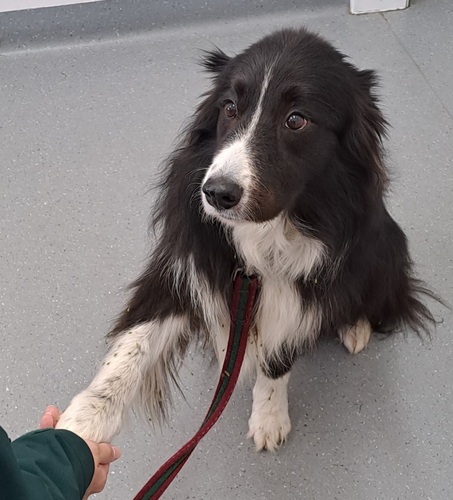
Helps You Advocate for the Appropriate Diagnostic Test
Veterinarians must balance what to investigate with what an owner is willing or able to pursue.
Is it Infection? Inflammation? What Organ system is involved? What Toxin? What Biological pathway?
The screen doesn’t replace diagnostic testing—it helps you give a clearer reason to recommend it.
A clearer question. A more targeted test. An easier conversation with the owner.
Know where to look next.
Damnit-V screen lets you know where to look next.
ORGANISE
Brings history, clinical findings, nutrition, pathology, imaging and screening results into one clinical picture. Imagine knowing that information at the time of the consultation.
PRIORITISE
Helps identify which findings and possible biological pathways deserve further investigation. Helps you advocate for the most important scientific testing.
CHALLENGE
AI-assisted clinical review looks for supporting evidence, contradictions, missing information and alternative explanations.
FOLLOW
Tracks findings, diagnostic confirmation and patient outcomes over time.
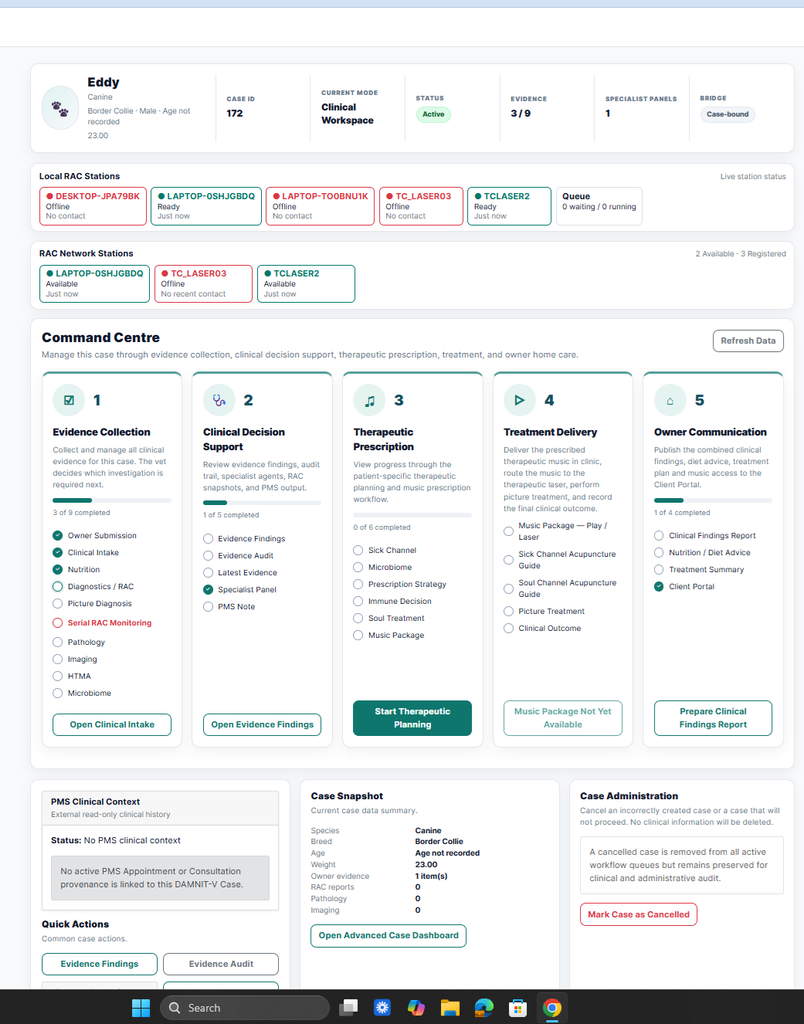
How does DAMNIT-V Help?
The everyday case
Make sure you do not miss subtle changes
The chronic case
The patient keeps coming back and the underlying problem remains unclear.
The multisystem case
Skin, gastrointestinal, neurological, behavioural or other findings don’t fit neatly into one diagnosis.
The large differential list
There are many reasonable possibilities, but investigating everything isn’t practical.
The unexplained case
Clinical findings or previous investigations explain only part of what you’re seeing.
Spectrum of Care
When diagnostic resources are limited, prioritising the investigations most likely to advance the case becomes especially important.
[EXPLORE CLINICAL USES]
Built for Veterinary Practice
Economically feasible
Non-invasive screening
Structured clinical reasoning
Repeatable measurements
Longitudinal patient tracking
Evidence integration
Veterinarian-controlled interpretation
DAMNIT-V Screen
Clinical decision support and functional screening for veterinary medicine.
DAMNIT-V does not provide an independent diagnosis and does not replace veterinary examination, pathology, imaging or other appropriate conventional diagnostic procedures.